Falling Light
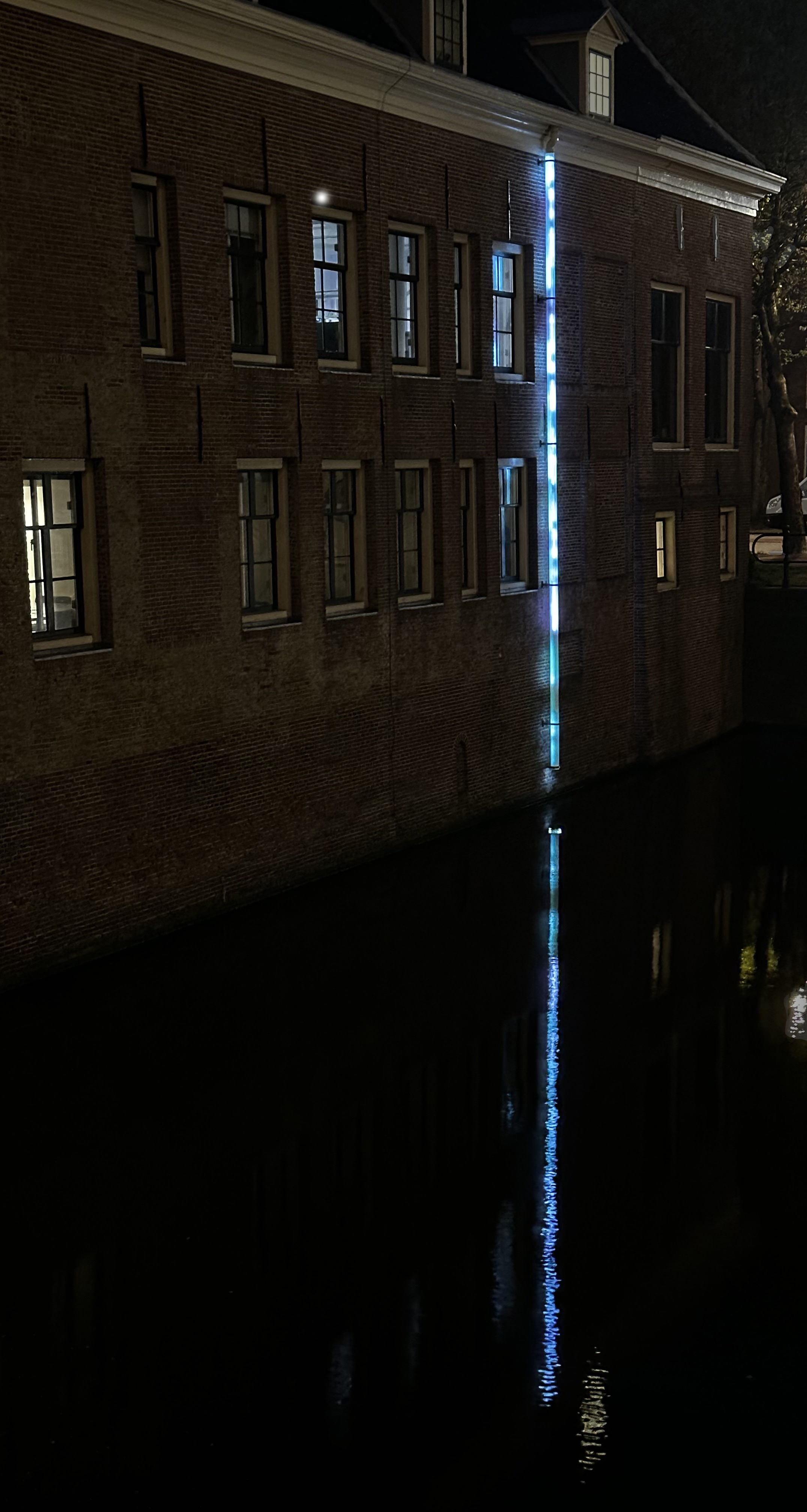
Falling Light
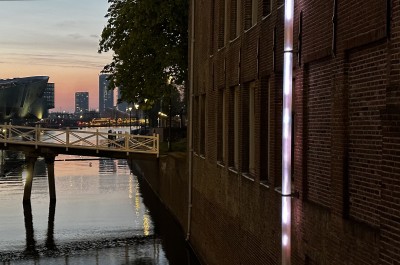
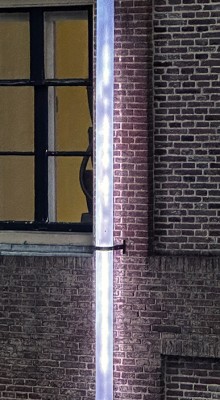
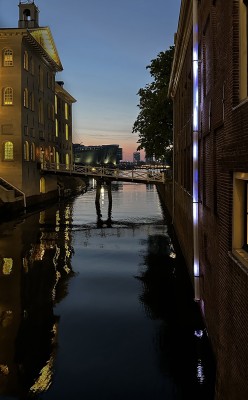
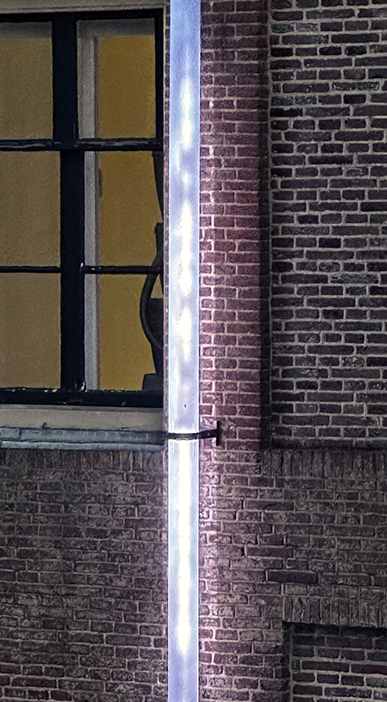
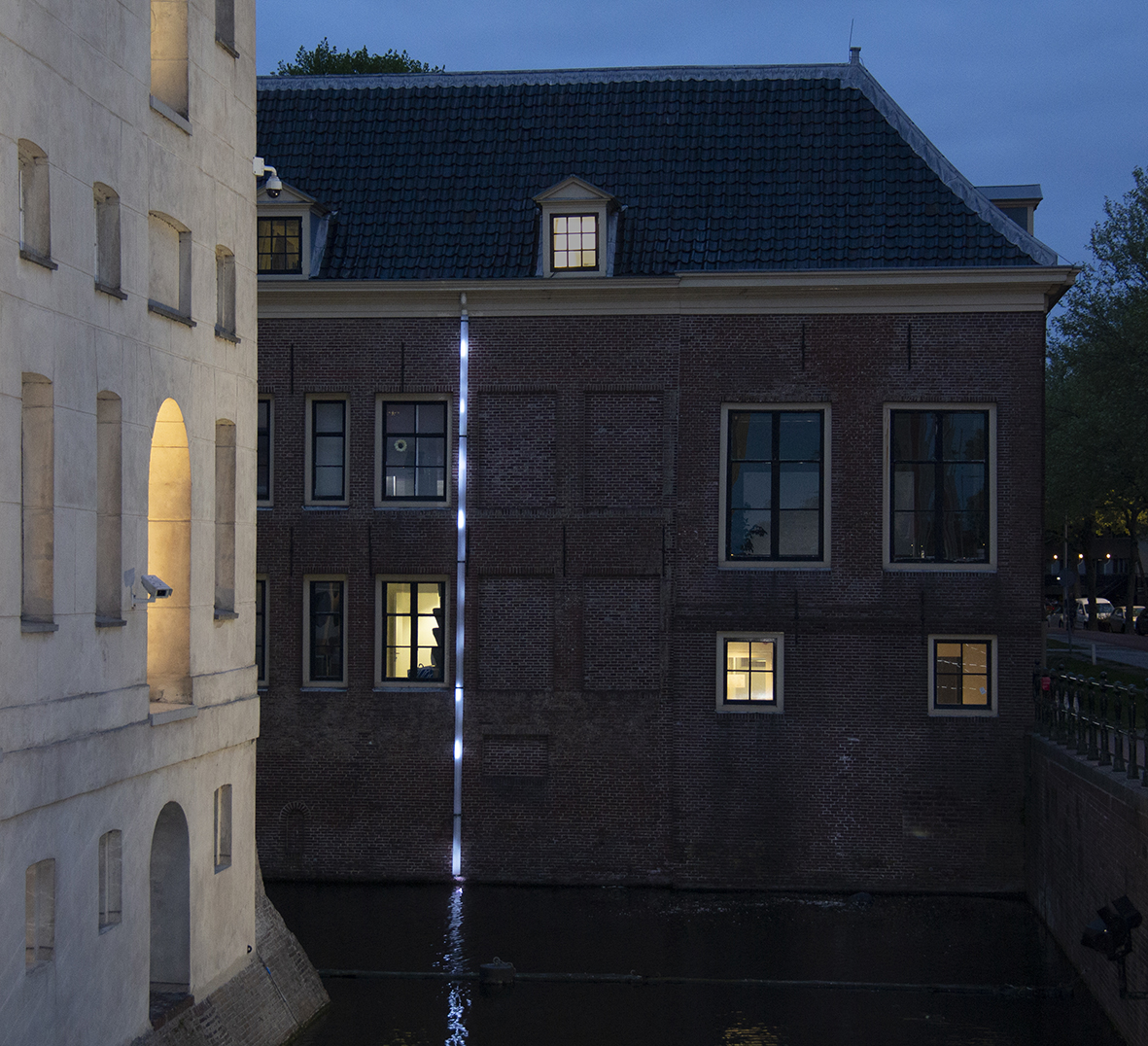
Specs: Rainwater drain 9.50 meters, LED, rainwater, light animation ± 6 minutes.
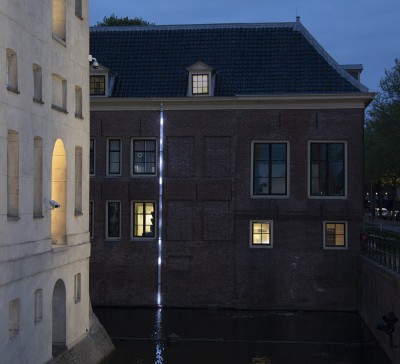
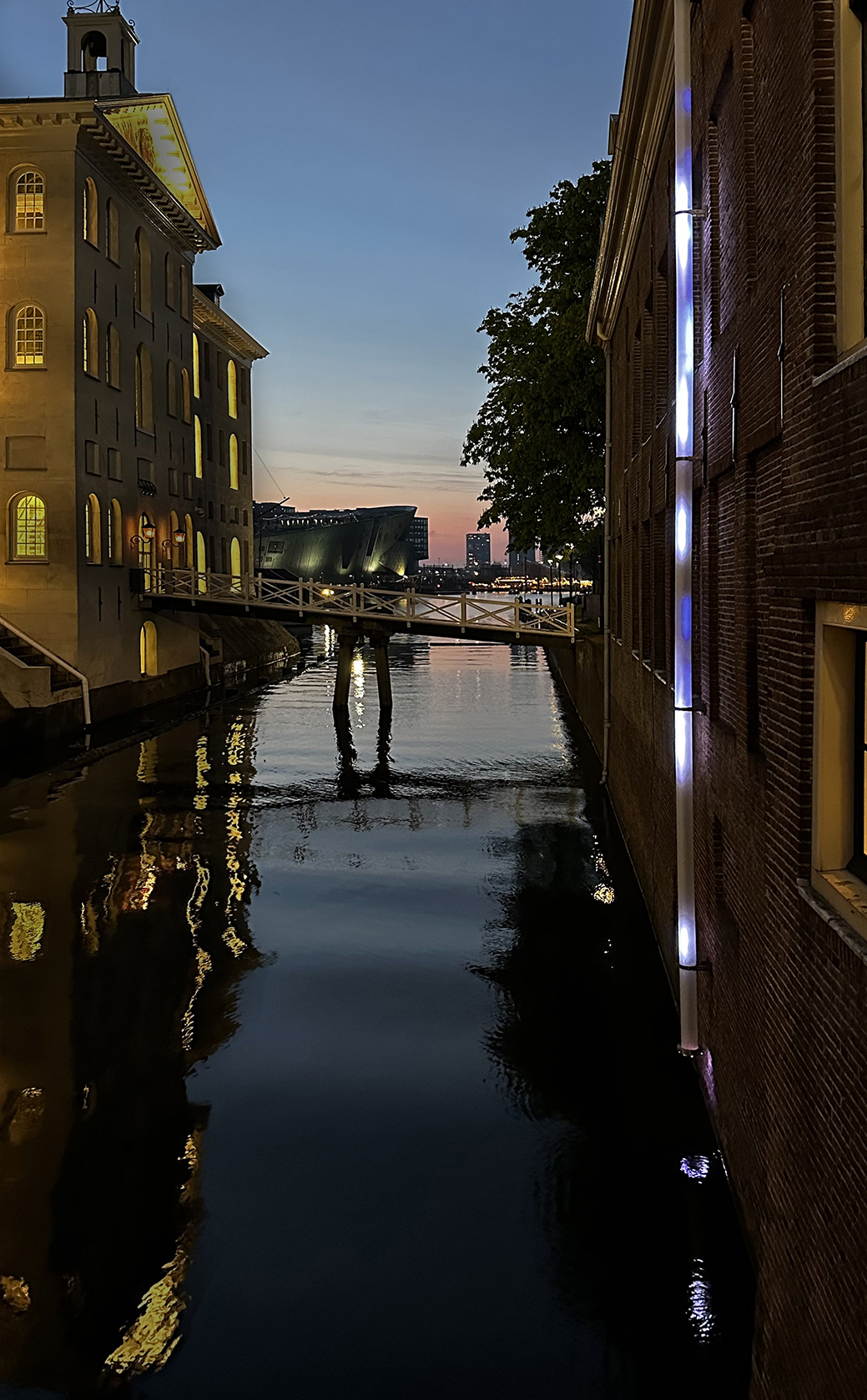
Location: 17th century exterior wall Wharf building Marineterrein next to the National Maritime Museum of Amsterdam.
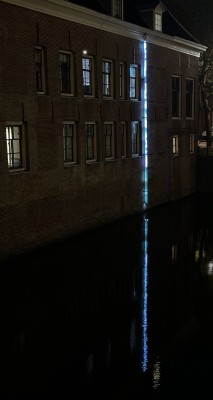
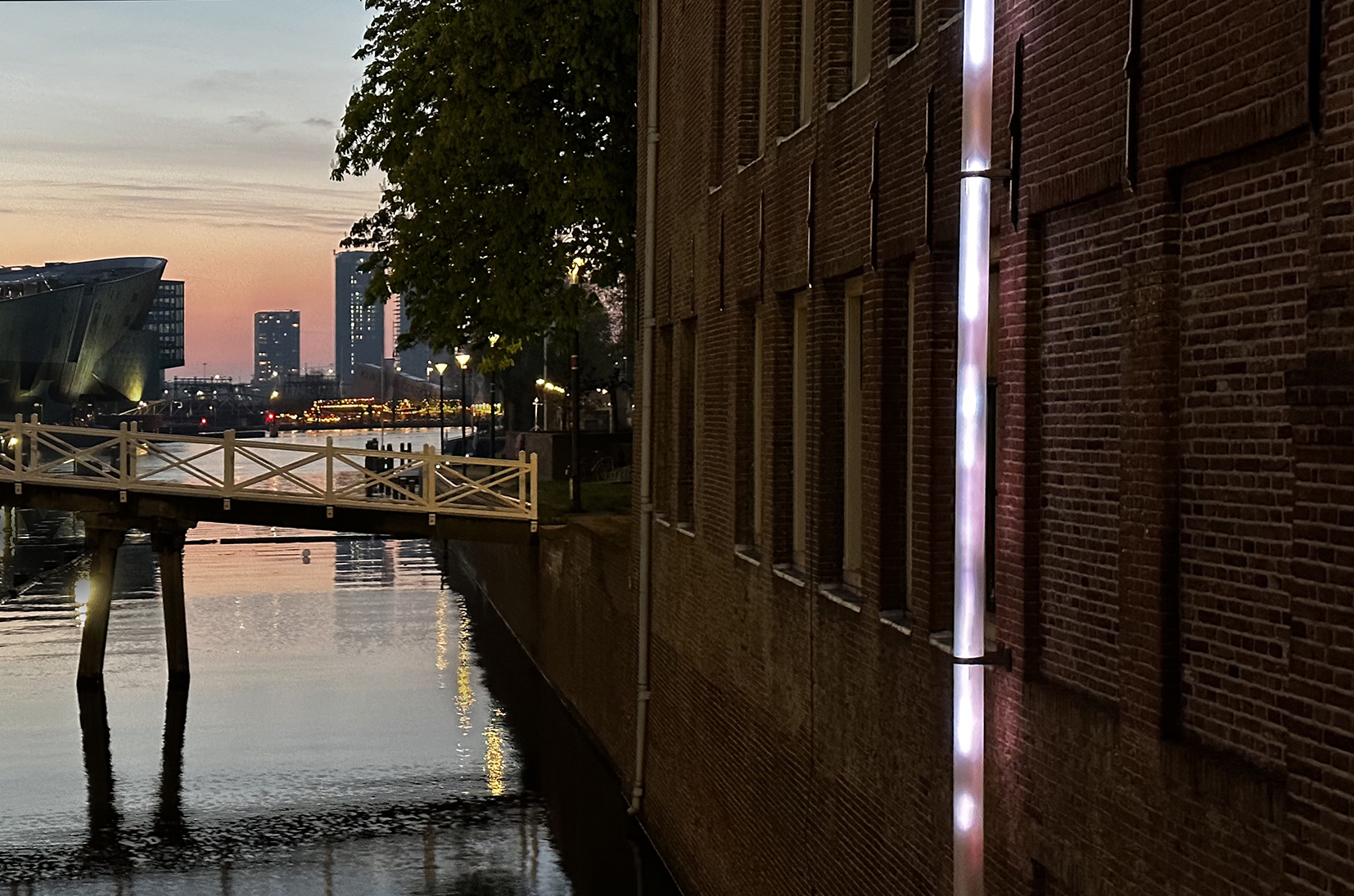
The artwork Falling Light explores the history, location and ecosystem of Amsterdam. At its heart is an existing drainage pipe, transformed into a semi-transparent rainwater drain. What appears to be a simple, functional object becomes a medium for an interplay between light and water.
The rhythmic lighting programme is inspired by the many forms of water and the natural colours that characterise this environment: from the fresh, algae-green of the IJ to the warm hues of the evening sky.
The light falls and fades. An energy that reflects the city and its ecosystems, in which appearance and disappearance alternate. Here, disappearance is not an end, but a transition, part of the cycle.
The city does not appear as a collection of stones, but as a landscape that is constantly in motion and remains connected to its surroundings.
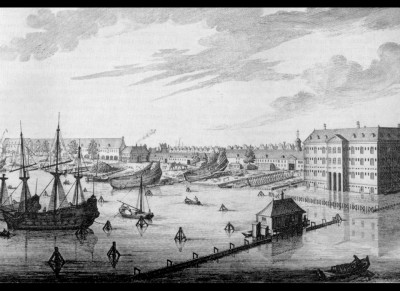
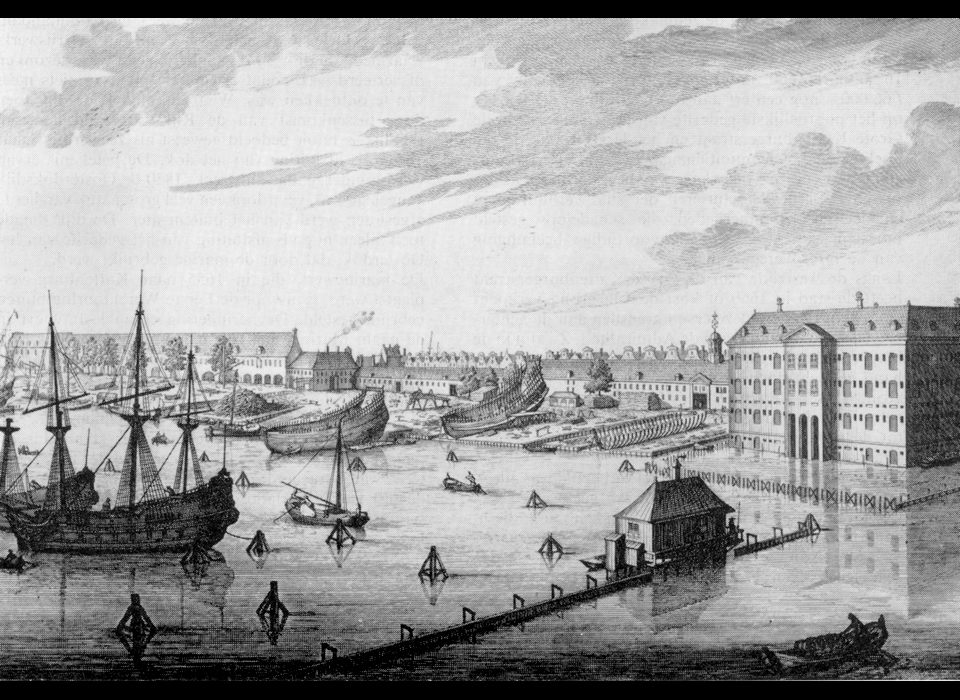
Around 1655, the Admiralty shipyards were established here – at the time, the largest port in the world. The Zeemagazijn, now the Scheepvaartmuseum, collected rainwater in its courtyard and supplied ships with provisions for their voyages to every continent.
The Marineterrein is now a testing ground for a liveable city in a changing world. Titia Ex is investigating here how light cycles can be integrated into public spaces. The project invites reflection on art, regeneration and urban development.
Vallend Licht
Specs: Hemelwaterafvoer 9,50 meter, LED, regenwater, lichtanimatie ± 6 minuten.
Lokatie: 17e eeuwse Werfgebouw Marineterrein naast het Scheepvaartmuseum, Amsterdam.
Het kunstwerk Vallend Licht brengt de geschiedenis, de locatie en het ecosysteem van Amsterdam. Centraal staat een bestaande afwateringspijp, getransformeerd tot een semi-transparante hemelwaterafvoer. Wat ogenschijnlijk een simpel functioneel object is, wordt een drager voor een spel tussen licht en water.
Het ritmische lichtprogramma is geïnspireerd op de vele verschijningsvormen van water en de natuurlijke kleuren die deze omgeving kenmerken: van het frisse algengroen van het IJ tot de warme tinten van avondrood.
Het licht valt en verdwijnt. Een energie die de stad en haar ecosystemen weerspiegelt, waarin verschijnen en verdwijnen elkaar afwisselen. Verdwijnen is hier geen einde, maar een overgang, een deel van de cyclus.
De stad verschijnt niet als een verzameling stenen, maar als een landschap dat voortdurend in beweging is en verbonden blijft met haar omgeving.
Rond 1655 ontstonden hier de werven van de Admiraliteit – destijds de grootste haven ter wereld. Het Zeemagazijn, nu het Scheepvaartmuseum, verzamelde regenwater op de binnenplaats en voorzag schepen van voorraden voor hun reizen naar alle continenten.
Het Marineterrein is nu een proeftuin voor een leefbare stad in een veranderende wereld. Titia Ex onderzoekt hier hoe lichtcycli kunnen worden geïntegreerd in de publieke ruimte. Het project nodigt uit tot reflectie over kunst, regeneratie en stedelijke ontwikkeling.